

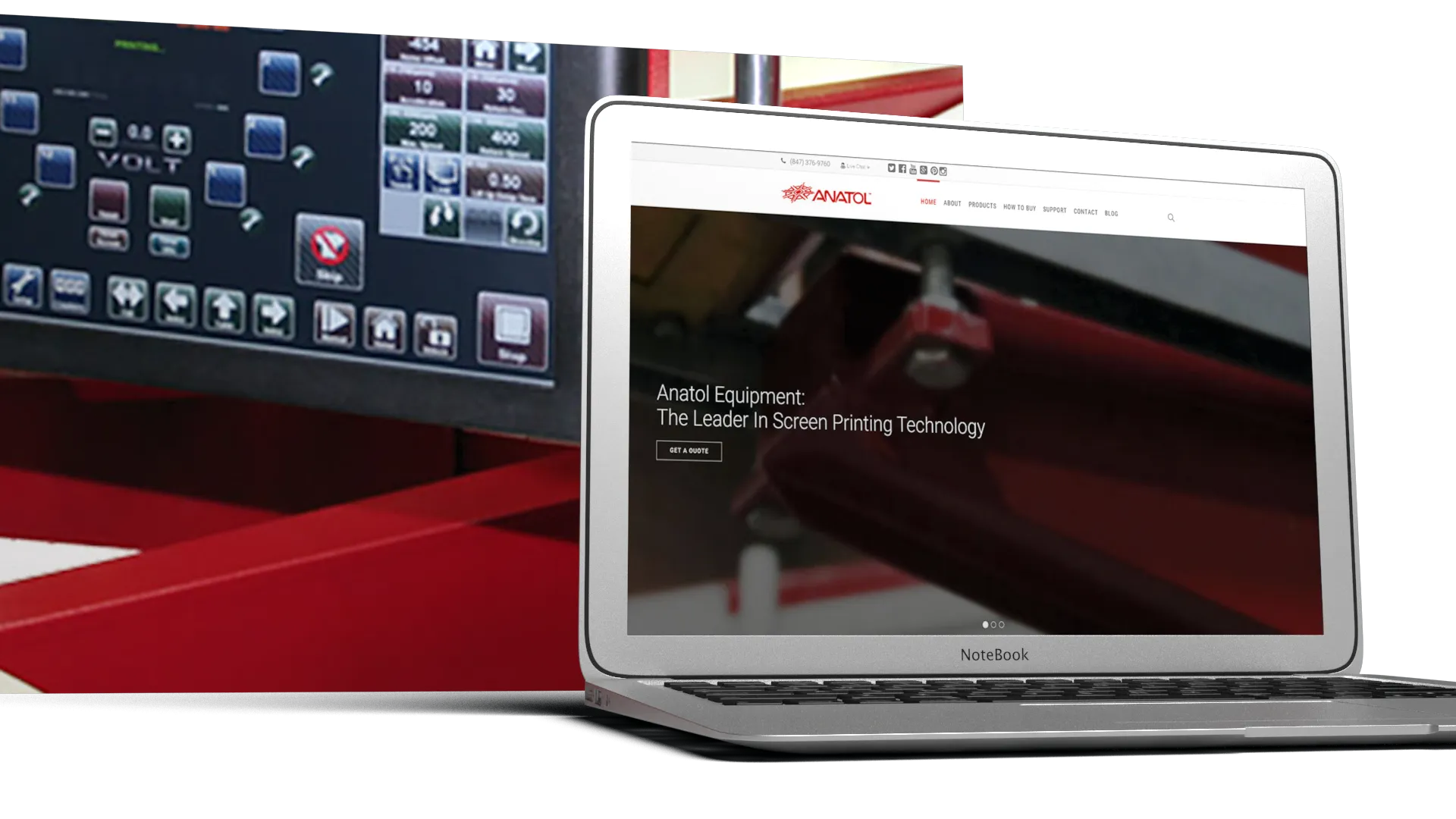
B2B Manufacturing
Anatol Equipment Manufacturing
A fragmented product and quoting experience rebuilt as one connected B2B platform.
Business systems · Websites · Automation
Websites, customer data, workflows, finance, and reporting rarely grow together. They get added one decision at a time until the business is harder to run than it was at half the size. We help bring them back into one way of working.
Free, no obligation, and useful even if the next step isn't with us.
Same business. Seven places.
Sound familiar?
It's what growth looks like from the inside. Each of these started as a reasonable decision, and together they became the way the business runs.
Leads come in. Follow-up depends on who remembers.
Requests arrive through a form, a phone call, and two inboxes. Nothing holds them in one list, so consistency depends on people.
The same information gets typed in three places.
A customer is created in the CRM, again in accounting, and again in a spreadsheet, because none of those tools talk to each other.
Understanding the week takes three spreadsheets.
Each one was built for a different question by a different person, and none of them agrees with the others.
The website looks fine. It just does not connect to anything.
A form submission becomes an email. After that, whether it turns into a customer is entirely manual.
Nobody is sure which system has the right record.
The same customer exists in four places with three phone numbers, and the correct one is whichever was edited last.
Reporting takes hours because the data lives everywhere.
The numbers exist. Assembling them into an answer is a manual job someone does on a Friday.
You keep adding software. The business is not getting easier.
Each tool solved one problem in isolation, and every new one added another place to check.
Too much still runs through the owner.
The process is real, but it lives in one person’s head instead of in the system everyone else works in.
Why it gets worse
Repeated handoffs cost time and can slow follow-up. Add your team's hours below to estimate the manual work involved.
Size it for yourself
Estimated annual cost of that work
$36,400
Your inputs × 52 weeks. An illustration to size the problem — not a projection, a quote, or a claim about what you would save. Real numbers come out of a discovery conversation.
Information gets moved by people instead of by systems.
Small tasks, repeated daily, across several people. None of them feel large on their own.
Payroll goes to keeping data in sync rather than to serving customers.
The quote, the callback, and the update all wait on a human step.
Nobody notices a lead that was never followed up. There is no record of it going cold.
Reporting is late, manual, and hard to trust, so judgment fills the gap.
The parts of the process that only exist in one person’s head have to route through that person.
Every new customer, hire, or location multiplies the manual work instead of absorbing it.
A better way to operate
Not more software. The same customer, the same job, and the same money — moving through one connected system instead of being re-entered at every handoff.
A customer makes contact
A form, a call, a referral, or a returning client.
The website captures and qualifies
The request is structured at the point it arrives, not retyped later.
The record lands in one place
One customer, one owner, one history everyone can see.
Routine steps happen on their own
Routing, acknowledgement, reminders, documents, and internal alerts.
The work moves through operations
Quote, order, purchasing, inventory, delivery, and invoice on one thread.
Finance and reporting stay current
The numbers assemble themselves instead of being rebuilt every week.
The system keeps running
Infrastructure, security, monitoring, and support underneath all of it.
Selected work
B2B Manufacturing
A fragmented product and quoting experience rebuilt as one connected B2B platform.

Architectural Lighting
A US market entry that needed the product line to be understandable before it could be sold.
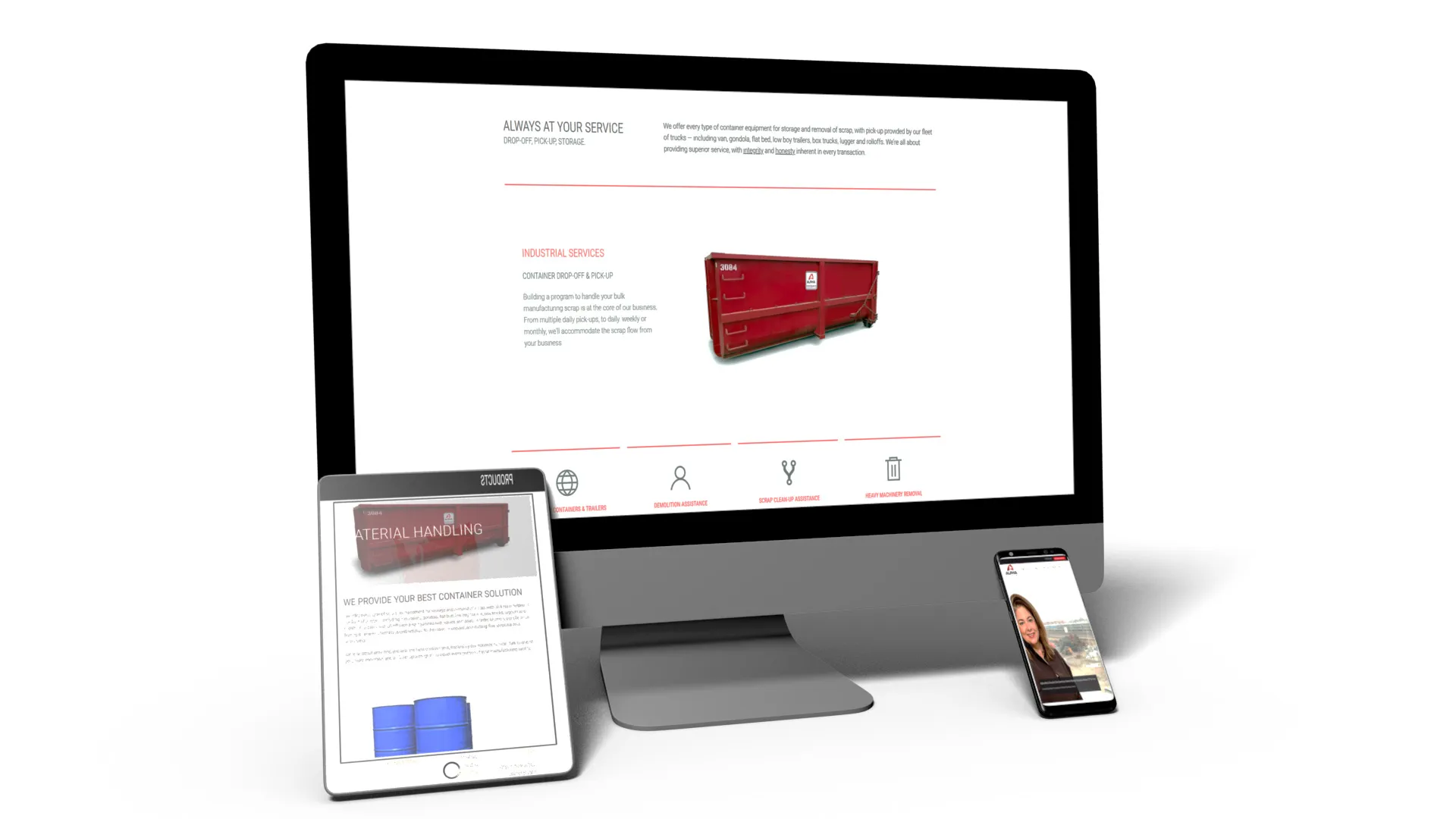
Industrial Recycling
Two brands in one group that needed to look related without looking identical.
How we start
We start by understanding how your business actually works — where work enters, where it stalls, and who is holding it together. Only then is it possible to say what each piece of your stack should do.
What we do about it
Your website explains the business, but the next step is unclear.
Modern Websites
A clear buyer path and reliable lead capture. CRM connections and advanced follow-up are defined by project scope.
Leads and customer information are scattered everywhere.
CRM & Business Systems
One place to understand customers, opportunities, follow-ups, and who owns what — configured around how your team already works.
Your team keeps doing work the software should already be doing.
Automation & AI
Automated routing, communication, document creation, reporting, and data movement between the tools you already run.
Sales, finance, purchasing, and operations aren’t working from the same information.
ERP & Odoo
A connected operational system and one source of truth, so a quote, an order, and an invoice are the same thread rather than three records.
Technology problems keep interrupting the actual work.
Operational IT
Reliable infrastructure underneath everything else — identity, security, devices, cloud, backups, monitoring, and a real support path.
Your systems shouldn’t slowly fall apart after launch.
Ongoing Digital Support
Maintaining, monitoring, and improving the systems the business runs on, with someone who already knows how yours are built.
Not sure which one you need?
Pick whichever is closest. This is a read on what that usually turns out to be — not a form, and nothing gets submitted.
What this usually turns out to be
The first question is where demand is being lost: acquisition, intake, ownership, or follow-up. A shared inbox is one possible handoff gap.
Where we'd look first
What this usually turns out to be
Usually a small number of repeated steps that move information between systems that were never connected. The fix is rarely more software.
Where we'd look first
What this usually turns out to be
Sometimes it genuinely looks dated. More often it reads fine and simply does not connect to anything behind it, so it generates email instead of business.
Where we'd look first
What this usually turns out to be
The classic growth pattern: each tool was a sensible decision on its own, and nobody was ever responsible for how they fit together.
Where we'd look first
What this usually turns out to be
The data usually exists. It is spread across systems that were never designed to be read together, so every answer is a manual assembly job.
Where we'd look first
What this usually turns out to be
Spreadsheets are usually where a real process was invented. The process is worth keeping. The spreadsheet is what stops scaling.
Where we'd look first
What this usually turns out to be
Interruptions rarely come from one big failure. They come from unowned infrastructure — accounts, devices, backups, and access nobody is responsible for.
Where we'd look first
What this usually turns out to be
A completely reasonable position. Knowing which category of software you need is our job, not yours. Describing what is slowing the business down is enough.
Where we'd look first
Not sure which one fits? Tell us what is slowing your team down.
Schedule a Free ConsultationWhat this costs
Published starting prices and what's included, separated by engagement type. Every engagement is confirmed in writing — scope, timeline, and a fixed price — before anything starts.
Implementation projects
CRM and automation start here; websites and ERP have separate entry prices.
From $2,500
Operational audits
A defined review and written roadmap, priced by deliverable.
From $1,500
Monthly support
A retained partner who already knows how your systems are built.
From $750/mo
Advisory
Time-based strategy and workshops, separate from a fixed-scope audit.
From $1,500/day
The wider ecosystem
AdōDesign Digital handles the operational side. When a project needs something else, it stays inside the same team.
The next step
Tell us what's slowing things down. We'll tell you where we'd look first, what we'd fix in what order, and what can wait — before anyone talks about scope.
A conversation
Thirty minutes on what is slowing the business down. No pitch, no deck.
An honest read
Where we would start, what can wait, and whether we are the right fit at all.
A written scope
Only if it makes sense — deliverables, timeline, and a fixed price, in writing.