

Structure & buyer path
Page architecture built around what a buyer needs to confirm, in the order they need it.
Modern Websites
A site can look good and still leave the team to handle every enquiry manually. We build a clear buyer path, make performance measurable, and connect intake to your process when the scope calls for it.
Published starting price: From $3,500. See scope and options · See relevant work
The same form submission, arriving as a tracked record with an owner and a follow-up date — instead of as an email.
Sound familiar?
These are the things owners describe when they say the website "isn’t doing anything" — and none of them are really about how it looks.
Enquiries arrive as email and stop there.
The form sends a notification. Whether it becomes a customer depends on someone reading it in time and remembering to reply.
Every first reply is four clarifying questions.
The form asks for a name and a message, so the real qualifying happens over the next two days by email.
It’s awkward on a phone, which is where most people see it.
The layout was designed on a desktop and adapted afterwards, so mobile inherited the compromises.
You’re invisible for the searches that actually matter.
The site ranks for your company name — which only people who already know you type in.
Nobody can change a price without calling someone.
Content lives in the build rather than in a system your team can safely edit.
You have no idea which pages produce enquiries.
Analytics record visits, not outcomes, because nothing connects a form submission to the deal it became.
If nothing changes
It rarely fails loudly. It just under-delivers by a bit, every week, in ways nobody attributes to the website.
A shared inbox can delay a reply when no one owns the next step.
Anything the site does not answer becomes a phone call, which caps how many enquiries a team can handle.
Without lead outcomes tied back to pages and sources, marketing spend is a guess reviewed after the fact.
A site nobody can maintain gets replaced every few years, and each replacement starts from scratch.
What good looks like
These are the goals we design around; integrations and measurement are scoped to the project.
How we approach it
Every build begins with three questions: who lands here, what do they need to confirm before they will contact you, and where do they go next. The structure of the site is the answer to those questions. The design is how that structure is expressed — not a separate exercise.
Then we build it as infrastructure. Fast, accessible, semantic, and wired into whatever the business already runs on: your CRM, your calendar, your quoting process, your reporting. The site becomes the front door of the operation rather than a brochure sitting next to it.
And we build it to be maintained. A CMS your team can use, a structure that supports new pages without re-architecting, and documentation for the person who inherits it.
The transformation
Nothing about the visitor changes. What changes is how much of the work after their click is done by a person.
Today
Seven steps, six of them manual, and no record if the lead goes cold.
Connected
The same work, done by the system, with a record either way.
What we actually build
Scope varies with the project. These are the components most builds are assembled from.
Page architecture built around what a buyer needs to confirm, in the order they need it.
A consistent, mobile-first visual system — not a set of one-off page layouts.
Core Web Vitals targets: LCP under 2.5s, CLS under 0.1, INP under 200ms, tested on the delivered build.
Keyword research, semantic structure, metadata, structured data, and internal linking built in from the start.
Multi-step forms, conditional logic, file uploads, and quote flows shaped around how you qualify.
Submissions routed into HubSpot, Pipedrive, Odoo, Salesforce, or whatever you run — with follow-up triggers attached.
A CMS your team can use safely, with the structure and permissions to match who edits what.
Analytics and conversion events wired so you can see which pages and sources produce business.
Accessible patterns and agreed WCAG AA testing scope, plus documentation and training at launch.
How it connects
It is worth exactly as much as what happens after the form is submitted.
Stacks we build with
Who this is for
Firms where the site has to establish credibility before anyone will make contact.
Service-area pages, local search visibility, and a quote path that captures the job details up front.
Technical product and capability pages, spec downloads, and qualified enquiry intake.
Location pages that stay consistent, managed centrally rather than maintained one by one.
In practice
A rebuild can connect the agreed forms to a pipeline, with source, ownership, and follow-up rules defined before launch.
The contact form becomes a short qualification path, so the first response is a real answer instead of a request for more detail.
A structured set of location and service pages built so a business shows up for the searches customers actually run.
Products organised the way they are specified, so a buyer can self-serve up to the point where sales adds value.
Published starting prices
Starting points, not quotes. Your proposal reflects your actual scope, and it is written down before anything begins.
From $3,500
Best for: Replacing an outdated site, or building a first real lead-generation site.
From $6,500
Best for: Teams who need the enquiries to land somewhere the whole team can see.
From $9,500
Best for: Businesses where the site needs to do real operational work, not just communicate.
The $3,500 website can deliver leads to an inbox or connect an existing CRM where agreed; it does not include new CRM setup or automated follow-up by default. Advanced intake, custom integrations, extra pages or content, and ongoing SEO are scoped separately. Every proposal states deliverables, timeline, and price in writing.
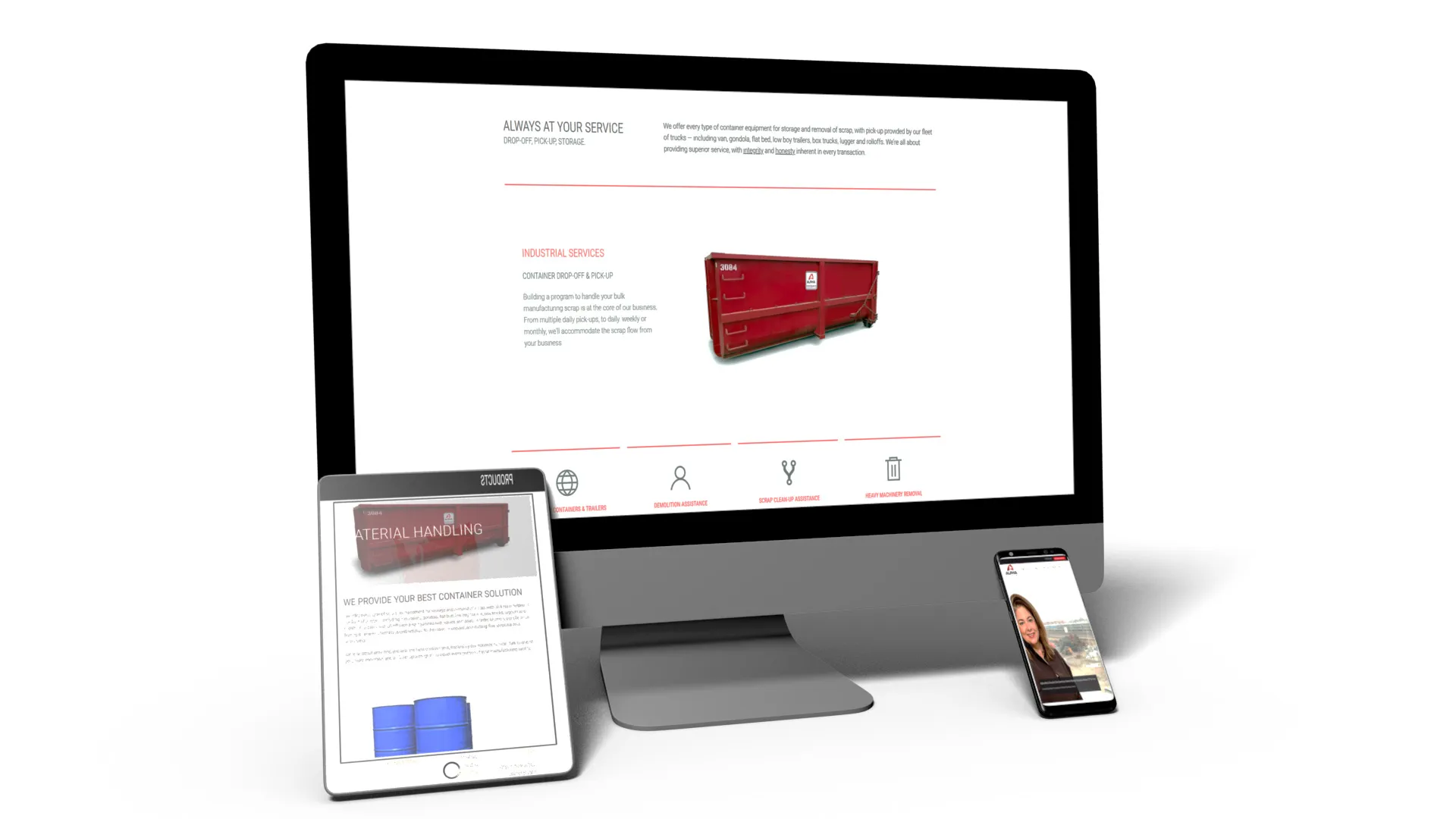
Relevant work · Industrial Recycling
How it runs
You always know what's happening now, what's next, who owns it, and what it costs.
A free call to understand your business, goals, and current systems. No pitch, no pressure.
A written proposal with scope, deliverables, timeline, and a fixed price — approved before anything starts.
Design, development, and configuration with regular check-ins so you stay informed end-to-end.
Deployment, training, and handoff documentation. Includes 30 days of post-launch support.
Ongoing maintenance, improvements, and a partner who knows your systems as you grow.
Questions
Often not. If the structure is sound and the problem is that nothing connects behind it, the useful work is intake, integration, and performance — which is a much smaller engagement than a rebuild. We say so when that is the case.
Yes. We build into whatever you already run — HubSpot, Pipedrive, Odoo, Salesforce, and others. Replacing a CRM you are happy with is rarely the right first move.
Yes. Content that changes goes into a CMS with a structure your team can edit without breaking the layout, and we train the people who will actually use it before handoff.
A focused site is typically 2–3 weeks, a website plus CRM 3–4 weeks, and a connected platform 4–6 weeks. The largest variable is how quickly content and decisions come back, which we plan around at kickoff.
Rankings can fluctuate after a rebuild. We preserve relevant URLs, map redirects for moved pages, carry over important content and metadata, and monitor search performance after launch.
Every project includes 30 days of post-launch support for adjustments and small fixes. After that, many clients move to a monthly retainer. It is optional, and never a condition of the build.
The wider ecosystem
AdōDesign Digital handles the operational side. When a project needs something else, it stays inside the same team.
The next step
Thirty minutes on where your enquiries come from, what happens to them, and whether a rebuild is genuinely the right answer. Sometimes it isn’t, and we will say so.
A conversation
Thirty minutes on what is slowing the business down. No pitch, no deck.
An honest read
Where we would start, what can wait, and whether we are the right fit at all.
A written scope
Only if it makes sense — deliverables, timeline, and a fixed price, in writing.