

Process mapping
Quote to cash documented as it actually runs today, including the parts that only exist informally.
ERP & Odoo
At a certain size, every department gets its own tool and the business loses the ability to see itself. ERP is the decision to put the operational spine back — one thread from quote to cash, with everyone reading the same record.
Published starting price: From $5,000. See scope and options · See relevant work
Sales, purchasing, and finance working from the same order — so a quote and an invoice cannot quietly disagree.
Sound familiar?
This is the specific stage of growth ERP exists for. Before it, ERP is overkill. After it, nothing else really works.
Sales, finance, and purchasing each use a different system.
Each was chosen to solve one department’s problem, and none of them were chosen together.
Inventory lives in a spreadsheet somebody maintains.
No system owns stock, so a person reconciles it — and that person is now load-bearing.
A quote, an order, and an invoice are three separate records.
Each is re-entered downstream, so they can and do drift apart.
Management waits until month-end to know anything.
Reporting is an assembly job, so the answer is always about a period that already finished.
Month-end is a reconciliation project.
Numbers that were never captured in one place have to be matched up after the fact.
Nobody can tell you what a job actually cost.
Labour, materials, and purchasing were recorded in different systems and never brought back together.
If nothing changes
Not gradually. There is a size past which manual reconciliation stops being viable, and most businesses discover it the hard way.
Decisions get made on a picture of last month, which is the wrong month to be managing.
Without job-level cost, unprofitable work is invisible until it shows up in an annual total.
Every new order, product, or location adds manual matching. The overhead compounds.
The people holding the spreadsheets together become impossible to promote, replace, or give time off.
What good looks like
The test: can you answer "what did that job cost us?" without asking three people?
How we approach it
ERP projects fail for one reason above all others: the software gets configured before anyone has agreed what the process actually is. So we start by mapping it end to end — how work is quoted, approved, purchased, delivered, and invoiced, and where those steps disagree today.
Then we configure in phases. One connected slice is tested and used before the next starts, reducing the operational risk of a simultaneous rollout.
Odoo is usually the right answer for businesses at this size, because it covers sales, purchasing, inventory, and accounting without enterprise licensing or an enterprise implementation. But it is a recommendation, not a default — if what you need is a better-configured CRM and two integrations, we will tell you that instead, and it will cost you considerably less.
The transformation
The same job, moving through the same business. The difference is how many times it is re-entered and how many versions of it exist.
Today
Eight steps, four re-entries, and at least three places the numbers can disagree.
Connected
One record travelling through the business, gathering detail rather than being retyped.
What we actually build
Scope depends on which parts of the operation are in the first phase. This is the full menu, not a mandatory list.
Quote to cash documented as it actually runs today, including the parts that only exist informally.
An honest assessment of whether you need ERP at all, and which platform and modules if you do.
Sales, purchasing, inventory, manufacturing, projects, and accounting set up around your workflow.
Customers, products, suppliers, stock, and open transactions brought across and reconciled.
Connections to the website, CRM, payment, shipping, and reporting tools you keep.
Approvals, routing, and business rules that reflect how your operation actually makes decisions.
Operational and financial views built for the questions your management actually asks.
Role-based sessions with the people who will run it daily, before go-live rather than after.
One slice at a time, with a rollback position, so the business keeps operating throughout.
How it connects
It should own operations and finance — and leave the parts other systems already do better alone.
Platforms we implement
Who this is for
Once inventory matters, spreadsheets stop being a reasonable system of record.
Where what you buy has to be tied to what you sold, and margins depend on that link.
Where labour, materials, and time have to come back together as a cost per job.
The clearest signal that the operational data was never captured in one place.
In practice
Sales, order, purchasing, delivery, and invoicing on a single thread, so the numbers cannot drift apart.
Stock driven by actual movements, with purchasing triggered by real demand instead of by someone noticing.
Labour, materials, and purchases attributed as they happen, so an unprofitable job is caught while it can still be fixed.
Sales and inventory go live first, finance follows the next quarter — with the business trading normally throughout.
Published starting prices
The $1,500 audit is a separate decision deliverable. Implementation starts at $5,000 for a focused first phase; modules, integrations, data quality, and training set the final scope and timeline.
From $1,500
Best for: Establishing whether you need ERP at all — and quite often finding that you do not yet.
From $5,000
Best for: Businesses ready to put sales, purchasing, inventory, and finance on one system.
From $1,500/mo
Best for: Businesses running ERP that need the configuration to keep pace with the operation.
Odoo is one possible platform, not a guarantee that every named ERP or accounting integration is included. Software licences, hosting, and vendor charges are separate. Proposal confirms first-phase modules, migration, dependencies, timeline, and fixed price.
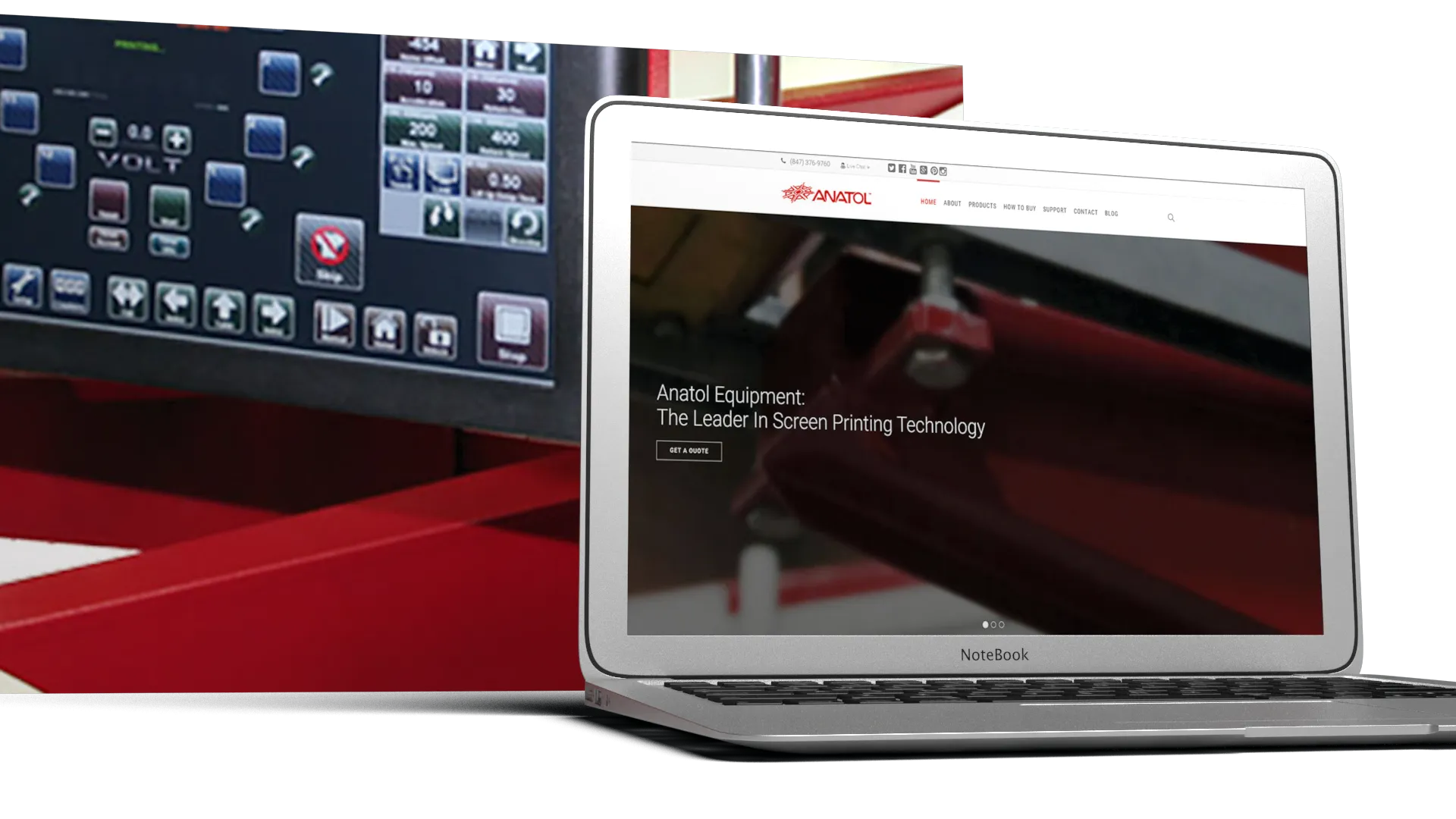
Relevant work · B2B Manufacturing
This project documents a customer-facing product catalog, commerce, quote-to-order path, and integrations. It does not document an ERP or Odoo implementation.
How it runs
You always know what's happening now, what's next, who owns it, and what it costs.
A free call to understand your business, goals, and current systems. No pitch, no pressure.
A written proposal with scope, deliverables, timeline, and a fixed price — approved before anything starts.
Design, development, and configuration with regular check-ins so you stay informed end-to-end.
Deployment, training, and handoff documentation. Includes 30 days of post-launch support.
Ongoing maintenance, improvements, and a partner who knows your systems as you grow.
Questions
Usually you do not, yet. The honest test is whether operational data has to be reconciled between systems to answer basic questions. If your problem is really lead tracking or two tools not talking, a CRM engagement or a few integrations will cost a fraction of this and solve it. The audit exists to establish which situation you are in.
For businesses at this size it covers sales, purchasing, inventory, and accounting without enterprise licensing or an enterprise-length implementation, and it can be adopted in phases. It is a recommendation based on fit, not a partnership commitment — where a different platform suits better, we will say so.
No. We plan phased adoption: one connected slice is tested and used before the next begins. The sequence and any necessary overlap with existing systems are agreed before migration.
Customers, products, suppliers, stock, and open transactions are migrated and reconciled before go-live. Historical records that will not reconcile cleanly are usually better kept as an archive than force-fitted, and we will flag those for you to decide rather than quietly transforming them.
A first phase is typically four to eight weeks. What moves that number is decision speed on your side and the state of the data being migrated — not the configuration itself.
Only if it matches how they work, which is why the process mapping comes before the configuration. Training is role-based and happens before go-live, and the first weeks after launch are supported rather than handed over.
The wider ecosystem
AdōDesign Digital handles the operational side. When a project needs something else, it stays inside the same team.
The next step
Thirty minutes on how work moves from quote to cash and where the numbers stop agreeing. Plenty of these conversations end with a smaller recommendation than ERP — which is a good outcome.
A conversation
Thirty minutes on what is slowing the business down. No pitch, no deck.
An honest read
Where we would start, what can wait, and whether we are the right fit at all.
A written scope
Only if it makes sense — deliverables, timeline, and a fixed price, in writing.